




Table of Contents
Top 5 Common Materials in Commercial Construction
Other Common Commercial Construction Materials
Transform Commercial Spaces with Claris Design•Build
Key Takeaways
✔ Concrete provides strong, cost-effective foundations and structural elements that can last for decades.
✔ Steel offers high strength and quick assembly, making it ideal for large spans and tall commercial buildings.
✔ Wood is valued for renewable sourcing, flexibility, and faster installation in many commercial spaces.
✔ Stone is preferred for long-term durability, weather resistance, and a premium natural finish.
✔ Brick/Masonry is known for fire resistance, load-bearing durability, and thermal mass that helps stabilize indoor temperatures.
Commercial buildings are designed to be strong, safe, and long-lasting, so the materials used need to handle heavy loads, constant use, and tough environmental conditions. Because of that, most commercial projects rely on a dependable mix of structural and enclosure materials that balance durability, cost, availability, and building-code requirements. While architects may swap finishes or systems depending on the project, a core set of materials shows up again and again across offices, malls, hospitals, schools, and high-rise developments.
Here are the top five most common commercial construction materials:
Top 5 Common Materials in Commercial Construction
1. Concrete
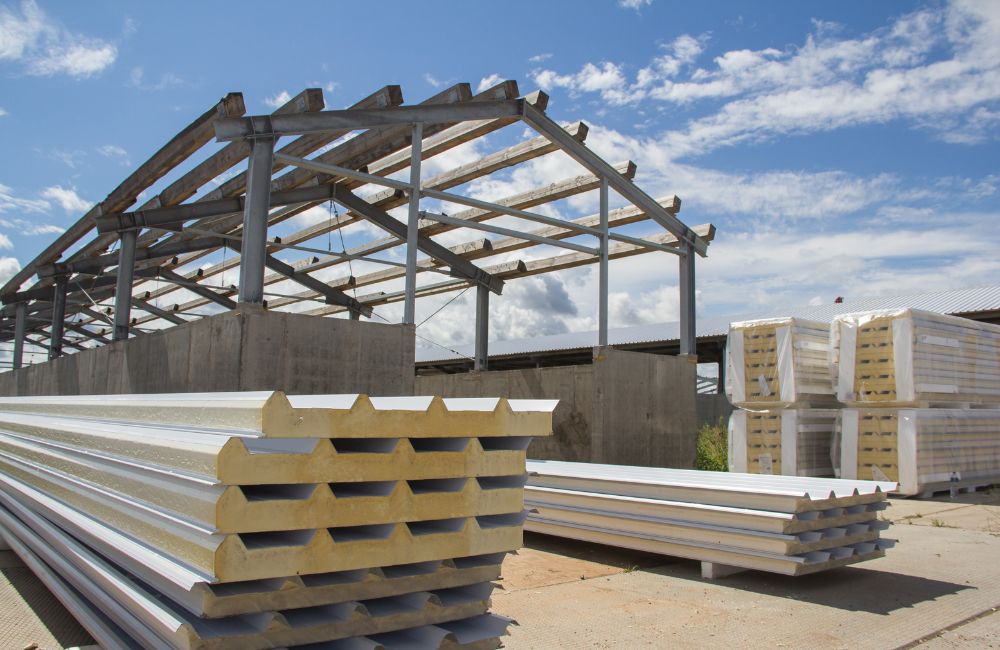 Concrete is a core component of commercial construction materials, valued for its strength, durability, and adaptability. Made by mixing cement, water, and aggregates like sand and gravel, it hardens into a solid mass that can support heavy loads for decades.
Because it can be poured and molded into almost any shape or size, concrete suits a wide range of commercial designs—from foundations and floors to columns and walls. Its combination of performance and cost-effectiveness makes it one of the most widely used materials in the construction industry.
Common Applications
- Building Foundations: Concrete provides a sturdy base that supports the weight of the entire building.
- High-rise Structures: Its strength is essential for constructing tall buildings in commercial zones.
- Bridges and Overpasses: Concrete's durability makes it ideal for supporting heavy bridge traffic.
- Parking Garages: These are used to create multi-level parking structures that can bear the load of numerous vehicles.
- Sidewalks and Pavements: Concrete is commonly used for paving due to its ability to withstand weather conditions and heavy foot traffic.
2. Steel
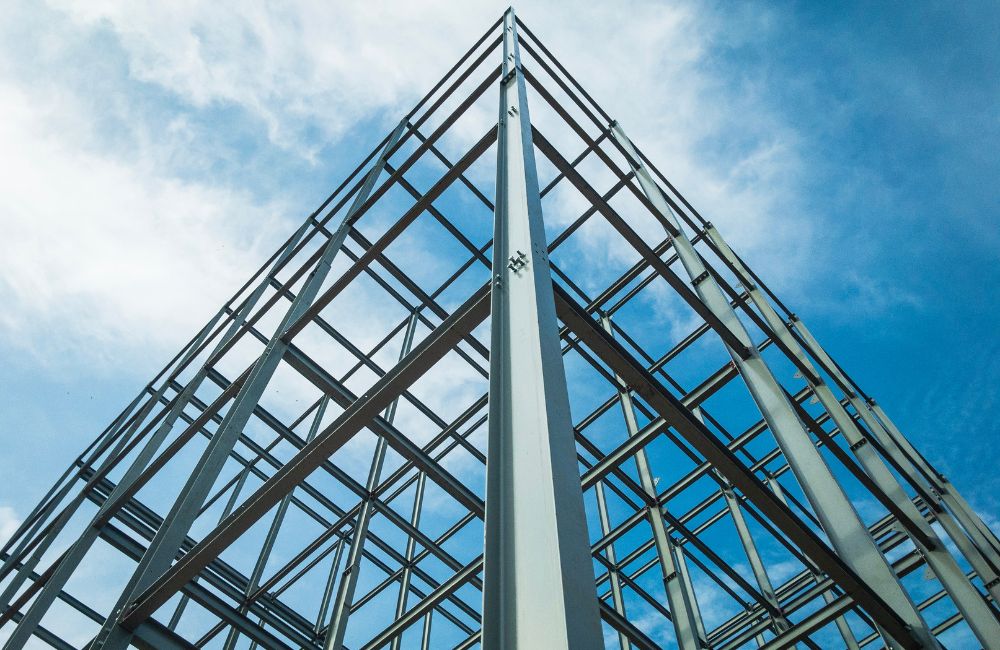
Steel is one of the most important commercial construction materials because of its exceptional strength, flexibility, and long-term durability. As an iron–carbon alloy, it resists wear and deformation while offering a high strength-to-weight ratio, which supports large spans and tall structures without adding excessive load.
In commercial projects, steel is especially valued for speed: components can be prefabricated off-site and assembled quickly on-site, reducing labor and timelines. Its adaptability also gives architects greater freedom to design modern, open, and highly functional spaces.
Common Applications
- Skyscrapers: Steel's strength is ideal for the framework of tall buildings, supporting many floors and heavy loads.
- Industrial Buildings: Factories and warehouses often use steel for its robustness and large-span capabilities.
- Sports Arenas: Steel is used to create the large, open spaces needed for sports facilities, without many support columns.
- Transportation Infrastructure: Steel is a key material in constructing bridges, railway tracks, and airports due to its ability to withstand heavy use and environmental stresses.
- Educational Institutions: Schools and universities use steel in buildings and structures for longevity and maintenance-free properties.
3. Wood
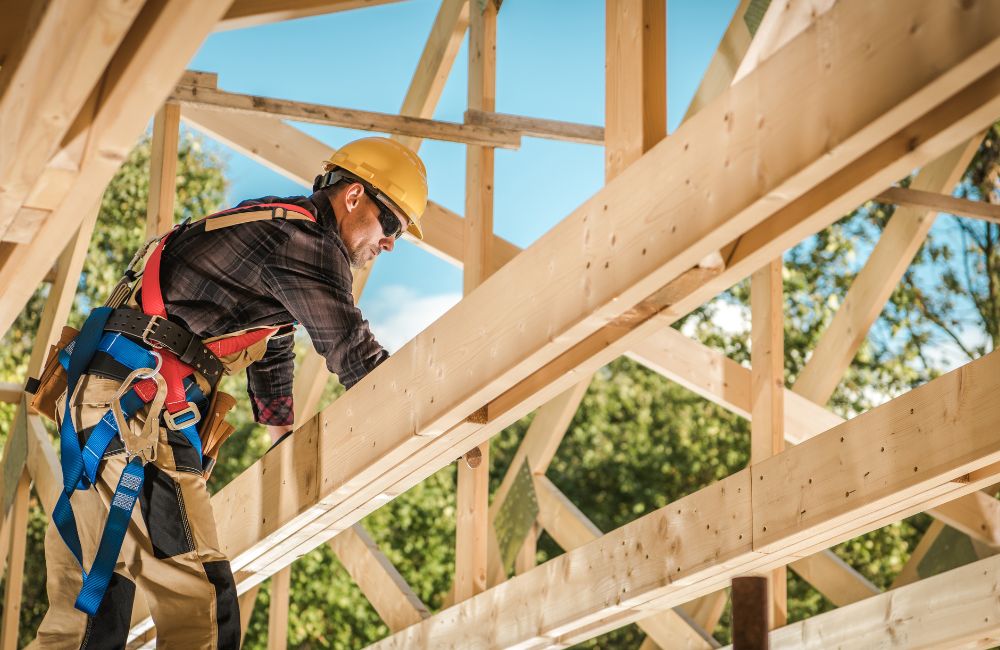
Wood is a versatile commercial construction material valued for its natural look, strength, and flexibility. As a renewable resource, it supports eco-friendly projects when responsibly sourced, and its ability to flex under stress makes it useful in quake- or wind-prone areas. It works across many building systems and styles, from structural framing to interiors, while adding warmth and character. Wood also insulates well, helping regulate indoor temperatures and reduce energy use, and its lightweight, easy-to-handle nature can speed up installation.
Common Applications
- Office Buildings: Wood is often used to construct office spaces for its inviting look and feel.
- Retail Spaces: Wood can create a welcoming environment in shops and boutiques, where it is used for fixtures, shelving, and structural elements.
- Restaurants and Cafés: Wood's natural warmth makes it ideal for creating cozy dining areas.
- Educational Facilities: Schools and libraries benefit from wood's sound-absorbing properties, creating quieter learning environments.
- Residential Complexes: Wood is used for framing, flooring, and decorative elements in multi-family housing units, providing strength and aesthetic appeal.
4. Stone
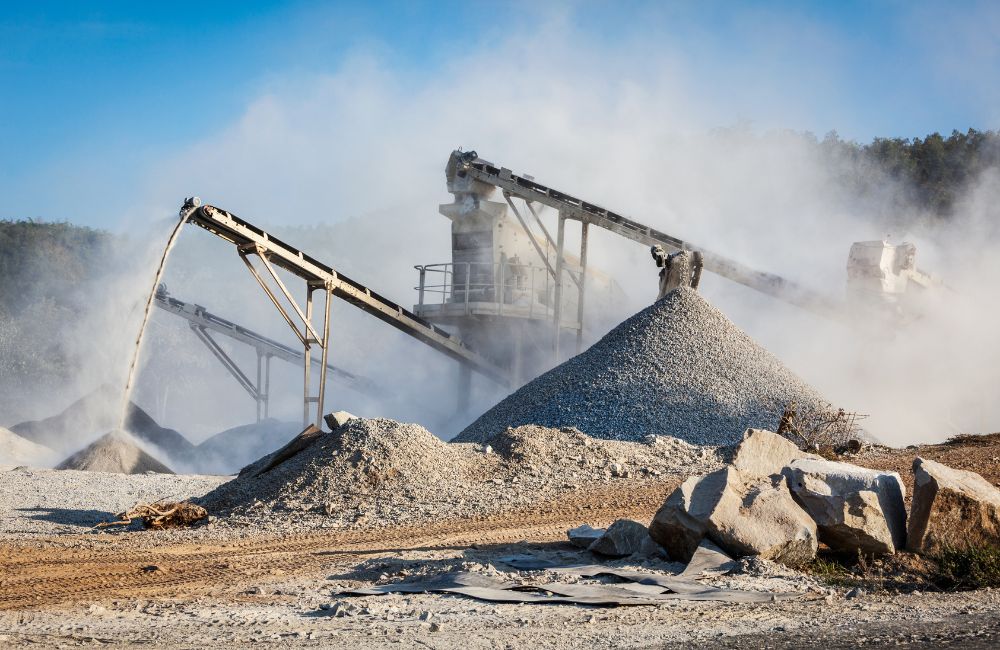
Stone is a long-standing commercial construction material known for its durability, natural beauty, and resistance to weathering. Types like granite, limestone, and marble add distinct textures and colors while holding up well in harsh conditions, including changing climates. It also offers natural insulation that supports energy efficiency and low maintenance over time. Since natural stone isn’t fired during production, it typically produces less CO₂ than many manufactured materials.
Common Applications
- Exterior Cladding: Stone provides a protective and visually appealing outer layer for buildings.
- Landscaping: Stone enhances the natural beauty of commercial properties by being used in outdoor spaces as walkways, walls, and decorative features.
- Flooring: High-traffic areas in commercial buildings benefit from stone's durability and resistance to wear.
- Monuments and Sculptures: Stone’s ability to resist environmental elements makes it a preferred material for outdoor art and monuments.
- Interior Features: In lobbies and reception areas, stone adds a touch of elegance and luxury, often used for countertops, flooring, and wall facings.
5. Brick/Masonry
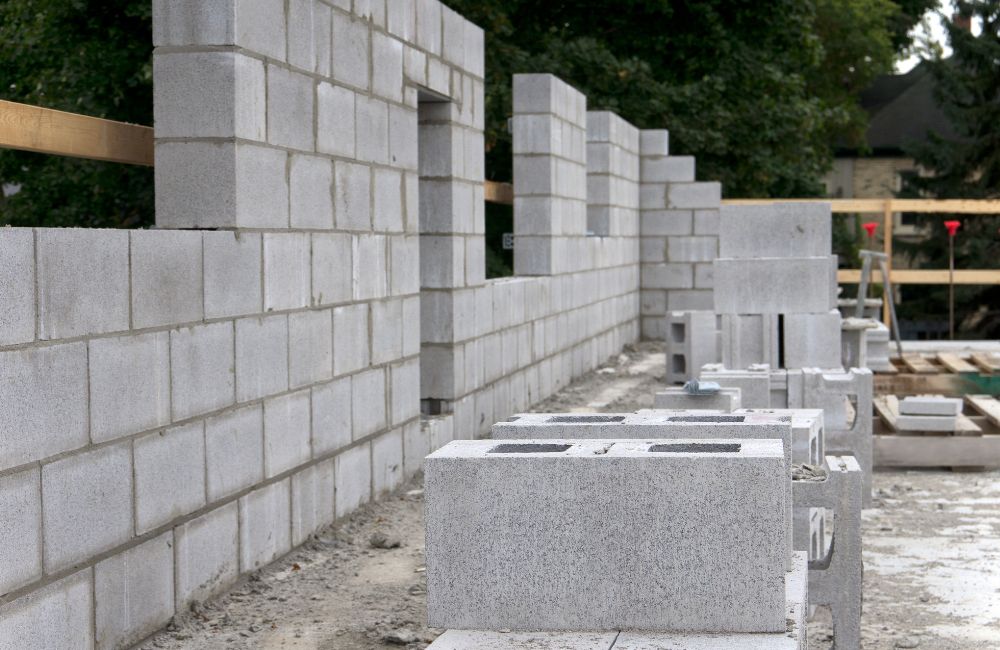
Brick and masonry are durable, fire-resistant commercial construction materials with strong compressive strength for load-bearing walls. Their high thermal mass helps regulate indoor temperatures by storing and releasing heat, improving comfort and reducing energy use. They also offer a timeless look through varied colors and textures.
Common Applications
- Load-Bearing Walls: Brick and masonry are often used for their ability to support a building's weight, making them ideal for the structural walls of commercial complexes.
- Facade and Exterior Cladding: They provide an attractive and protective outer layer that stands up to weather and time.
- Landscaping Features: Used in creating durable and visually appealing outdoor spaces, such as patios, walkways, and retaining walls.
- Fireplaces and Chimneys: Bricks' fire-resistant nature makes them perfect for constructing fireplaces and chimneys in commercial venues.
- Historical Restorations: In restoring and maintaining historical buildings, brick and masonry are preferred for their authenticity and period-appropriate appearance.
See how we deliver Commercial Construction Solutions in Utah
Other Common Commercial Construction Materials
Other commercial construction materials also support performance, look, and sustainability alongside concrete, steel, wood, stone, and masonry.
- Glass is used for windows, facades, and partitions because it brings in natural light and creates open, modern spaces.
- Plastics are lightweight and cost-effective, common in piping, insulation, roofing, and decorative parts.
- Composites (like FRP or carbon-fiber blends) combine strength and low weight for structural or façade uses.
- Aluminum is popular for frames, curtain walls, and roofing due to its corrosion resistance and recyclability.
- Ceramics—tiles and porcelain—are durable, water-resistant finishes for floors, walls, and counters.
Frequently Asked Questions
What is currently the least expensive building material?
The least expensive material is usually whichever basic option is most locally available, like concrete blocks, standard lumber, or corrugated metal sheets. Prices swing a lot based on region, transport, and market demand. So in practice, “cheapest” depends more on location than on a single universal material.
Which construction material is used most often?
Concrete is generally the most used material in construction because it works for foundations, floors, and structural elements. It’s widely available and fits many types of projects. Even when other materials dominate above ground, concrete is still common at the base.
What materials are commonly used for framing?
Framing is most often done with wood or steel. Wood framing is common for smaller buildings, while steel framing is popular for larger commercial structures. In some places, concrete framing systems are also used, especially for multi-story builds.
Which construction material lasts the longest?
Materials like stone, brick, and reinforced concrete tend to last the longest when they’re properly designed and maintained. They handle weathering and heavy loads well over time. Actual lifespan still depends a lot on environment and upkeep.
Is there any building material that is completely fireproof?
No material is perfectly fireproof in every situation, but some are highly fire-resistant. Concrete, brick, and stone don’t burn and usually hold up well under fire. Still, extreme heat can damage almost anything, so fire safety is about the whole system, not one material.
Transform Commercial Spaces with Claris Design•Build
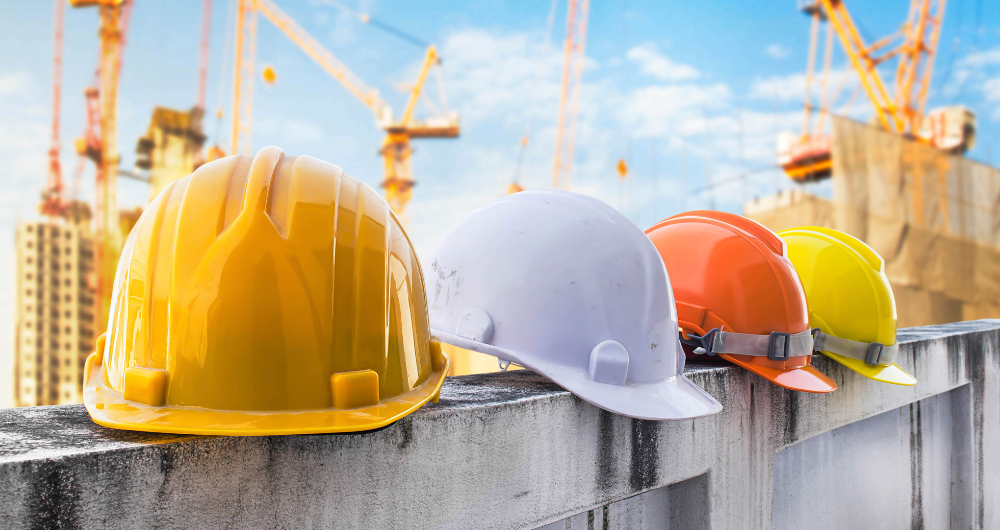
To bring your commercial vision to life, consider partnering with Claris Design•Build. As a leading commercial design and construction firm, Claris Design•Build specializes in transforming ideas into reality. With our expertise and commitment to excellence, We can help you navigate the complexities of material selection. Contact us today and experience the difference in commercial construction done right.

![[2025 UPDATE] 44 Construction Safety Statistics for 2025](https://www.clarisdesignbuild.com/wp-content/uploads/2024/03/Construction-Safety.jpg)
![[2025 Updates] Top 15 Benefits of AI in the Construction Industry](https://www.clarisdesignbuild.com/wp-content/uploads/2024/03/pexels-pixabay-256090.jpg)