




Construction has always balanced precision, speed, and safety. For decades, site surveys and inspections relied on manual measurements, ladders, scaffolding, and time-intensive fieldwork. Today, drone technology has fundamentally changed that equation. By delivering faster data collection, improved accuracy, and safer job sites, drones are reshaping how construction projects are planned, monitored, and executed—especially for complex residential and commercial builds.
For property owners, architects, and builders in Connecticut, understanding how drones are used in construction offers insight into why modern projects are becoming more efficient, transparent, and controlled from start to finish.
Quick Facts
- Drones dramatically reduce the time needed to collect and analyze site information.
- Remote inspections limit worker exposure to heights and hazardous conditions.
- Accurate aerial data leads to smarter design decisions and fewer change orders.
- Visual documentation keeps owners, designers, and builders aligned.
- Drone records support future maintenance, renovations, and expansions.
What's In This Guide
- What Drone Technology Means for Modern Construction
- Transforming Site Surveys With Speed and Precision
- Enhancing Safety Inspections on Active Job Sites
- Improving Communication and Transparency
- Cost Efficiency and Long-Term Value
- Regulatory and Professional Considerations
- The Role of Drones in High-End Residential and Custom Projects
- What the Future Holds for Drone Technology in Construction
- Frequently Asked Questions About Drone Technology in Construction
- Choose a Design-Build Partner Who Leverages Technology for Better Outcomes
What Drone Technology Means for Modern Construction
In construction, drones—also known as unmanned aerial vehicles (UAVs)—are equipped with high-resolution cameras, LiDAR sensors, GPS, and thermal imaging tools. These capabilities allow them to capture detailed aerial data that was once difficult, costly, or risky to obtain.
Rather than replacing skilled professionals, drones enhance their ability to make informed decisions. Surveyors, architects, engineers, and builders can now analyze sites from multiple angles, identify potential issues earlier, and maintain accurate records throughout a project’s lifecycle.
Transforming Site Surveys With Speed and Precision
Faster Data Collection
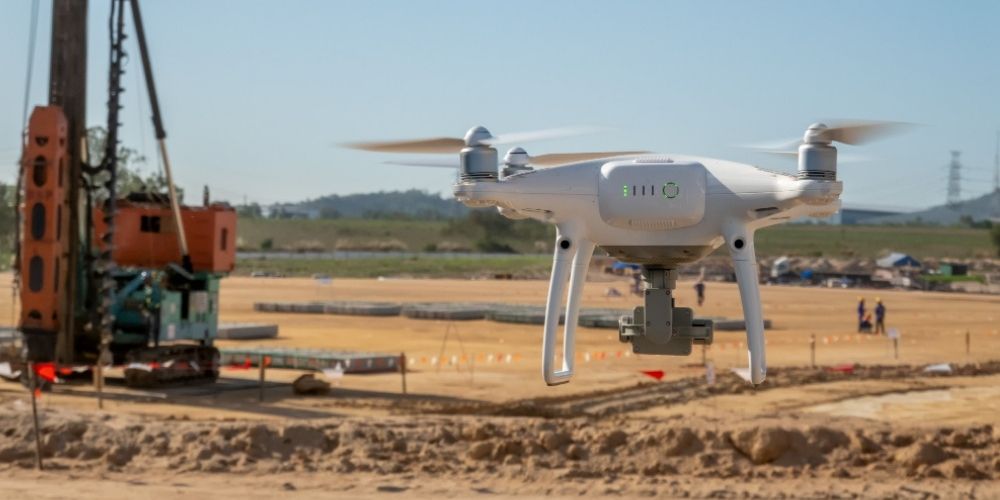
Traditional land surveys can take days or even weeks, particularly on large or irregular sites. Drones dramatically reduce that timeline. In a single flight, a drone can capture hundreds of aerial images that are processed into detailed maps and 3D models.
This speed matters during early project phases, where delays in surveying can push back design development, permitting, and construction schedules.
Improved Accuracy and Detail
Modern drones generate orthomosaic maps and point clouds with centimeter-level accuracy. These outputs allow teams to measure distances, elevations, slopes, and volumes digitally—often more precisely than manual methods.
For construction projects in Connecticut, where terrain, drainage, and zoning constraints vary widely, this level of detail supports smarter design decisions and fewer surprises once work begins.
Better Pre-Construction Planning
Accurate site data enables more realistic planning. Builders can identify grading challenges, access limitations, and environmental considerations before breaking ground. This reduces change orders and helps align design intent with real-world site conditions.
Enhancing Safety Inspections on Active Job Sites
Reducing Risk to Workers
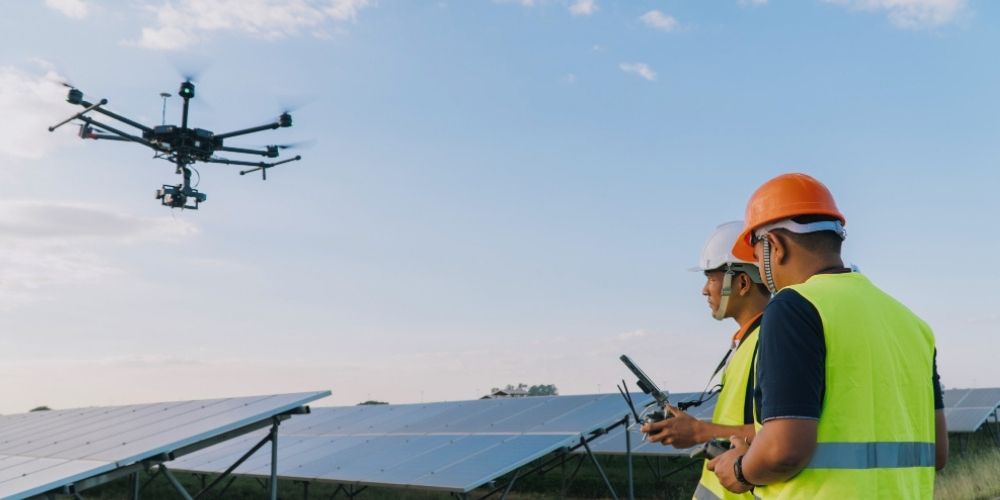
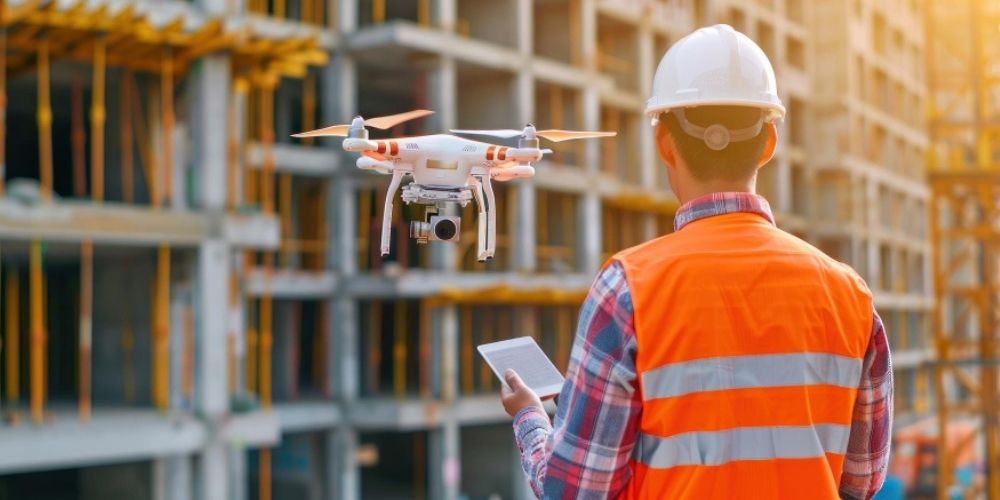
One of the most significant advantages of drones is safety. Inspecting roofs, facades, structural elements, or tall frameworks traditionally requires workers to climb ladders or scaffolding. Drones perform these inspections remotely, minimizing exposure to falls and other hazards.
This is especially valuable during early framing, roofing, or structural assessments when conditions may be unstable.
Real-Time Monitoring
Drones provide real-time visual access to hard-to-reach areas. Project managers can identify safety concerns—such as unsecured materials, improper staging, or structural irregularities—before they become serious issues.
Routine drone inspections help maintain compliance with safety standards while promoting a culture of proactive risk management.
Emergency and Post-Event Assessments
After storms, high winds, or other events, drones can quickly assess damage without putting inspectors at risk. This allows teams to make informed decisions about next steps while maintaining site safety.
Improving Communication and Transparency
Clear Visual Documentation
Drone imagery creates a visual record of progress that is easy to understand, even for non-technical stakeholders. High-resolution photos and videos show exactly what is happening on-site, reducing miscommunication between owners, designers, and builders.
Progress Tracking Over Time
By capturing data at regular intervals, drones allow teams to compare progress against schedules and plans. Any deviations can be identified early, making it easier to adjust workflows or resolve issues before they escalate.
Supporting Collaboration
Visual data from drones helps align architects, engineers, and construction teams. Everyone works from the same, up-to-date information, which improves coordination and decision-making throughout the project.
Cost Efficiency and Long-Term Value
Lower Surveying and Inspection Costs
While drones require specialized operation and data processing, they often reduce overall costs by minimizing labor hours and rework. Faster surveys and inspections translate to fewer delays and more predictable budgets.
Fewer Errors and Change Orders
Accurate data reduces assumptions. When site conditions are clearly documented from the beginning, designs are more realistic and construction proceeds with fewer unexpected complications.
Better Asset Documentation
Drone-generated models and imagery serve as valuable records long after construction is complete. They can support maintenance planning, renovations, and future expansions.
Regulatory and Professional Considerations
Drone use in construction is regulated by the Federal Aviation Administration (FAA). Licensed operators must follow strict guidelines related to airspace, visibility, and safety.
Equally important is data interpretation. Raw drone data only becomes valuable when it is correctly analyzed and integrated into design and construction workflows. This requires experience, technical expertise, and a clear understanding of how aerial data impacts real-world building decisions.
The Role of Drones in High-End Residential and Custom Projects
In design-build environments, especially for custom homes and complex renovations, drones support a higher standard of execution. They allow teams to evaluate how a structure interacts with its surroundings, confirm alignment with design intent, and maintain quality control at every stage.
For homeowners, this means fewer surprises, better communication, and greater confidence that the finished project reflects both the design vision and the realities of the site.
What the Future Holds for Drone Technology in Construction
Drone capabilities continue to evolve. Integration with artificial intelligence, automated progress reporting, and advanced thermal analysis will further expand their role in construction. As these tools become more refined, they will continue to raise expectations for accuracy, safety, and transparency across the industry.
For clients, this evolution reinforces the importance of working with professionals who embrace technology thoughtfully—using it to enhance craftsmanship rather than replace it.
Frequently Asked Questions About Drone Technology in Construction
How are drones used in construction site surveys?
Drones are used to capture aerial images and data that are processed into accurate maps, 3D models, and elevation measurements. This allows construction teams to assess terrain, boundaries, and site conditions faster and with greater precision than traditional surveying methods.
Are drones safe to use on active construction sites?
Yes. When operated by licensed professionals following FAA regulations, drones improve safety by reducing the need for workers to access hazardous or hard-to-reach areas during inspections.
Do drones replace traditional surveyors or inspectors?
No. Drones support professionals by providing better data and visibility. Surveyors, engineers, and inspectors still analyze the information and make decisions based on their expertise.
What types of construction projects benefit most from drones?
Drones are especially valuable for large sites, complex terrain, multi-story structures, custom homes, and projects requiring detailed documentation throughout construction.
Is drone technology cost-effective for construction projects?
In most cases, yes. Drones reduce labor time, improve accuracy, minimize rework, and help prevent delays—often lowering overall project costs over the life of the build.
Choose a Design-Build Partner Who Leverages Technology for Better Outcomes
When evaluating a construction or renovation project, it’s worth asking how site data is gathered, how safety is managed, and how progress is documented. Firms that integrate tools like drone technology into their process are better equipped to deliver efficient, well-coordinated, and high-quality results.
For Connecticut property owners seeking a thoughtful, technology-informed approach to custom building and renovation, Claris Design•Build exemplifies how modern tools and experienced professionals can work together to create smarter, safer, and more successful projects.